
Migraine: pregnancy, labour and postpartum experiences
Louise and Emma share their experiences of managing migraine during their pregnancies.
During pregnancy, labour and the period after birth (postpartum), significant changes in hormone levels are experienced. With hormones playing a big role in migraine, it’s no surprise that many people find their usual patterns of migraine completely upended!
We often hear about migraine improving, or even migraine attacks and symptoms disappearing altogether, during pregnancy. This seems to be the case for up to 9 in 10 women, but certainly not everyone. Even for those who experience a welcome reprieve from migraine during the nine months of pregnancy, migraine attacks can return in the postpartum stage, or even during labour.
Here, two women, Louise and Emma, share their experiences of migraine through pregnancy, labour and postpartum.
“For six glorious months postpartum, I felt like myself. Then the migraine attacks crept back.”
 Louise had never experienced migraine prior to the birth of her first child:
“Just nine months after giving birth to my first child, chronic daily headache and migraine took over my life. I mourn those lost 18 months until I found some relief with medication – the early years of my son’s life, dulled by constant pain and desperately looking for answers.
When I then became pregnant with my daughter, the headaches vanished entirely. And for six glorious months postpartum, I felt like myself. Then the migraine attacks crept back – first once or twice a month, then more, until I was again labelled chronic.”
For those who are pregnant, planning a pregnancy or breastfeeding, understanding the right medication can also be a challenge, as some treatments may not be suitable. Sometimes though, the benefits of taking medicines might outweigh any potential risks, and it’s worth a conversation with a GP or specialist to decide what is best for you.
“A migraine-free pregnancy does not always guarantee a migraine-free birth.”
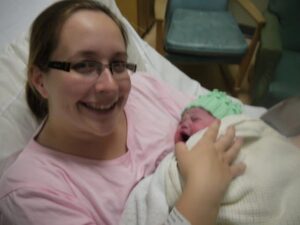 Emma, who has lived with migraine since age 11, initially noticed a reprieve in her migraine symptoms when she first became pregnant:
“During my first pregnancy, my migraine attacks vanished into oblivion from the outset of those pink lines appearing; an unexpected but very welcome bonus to an already exciting time!
For almost 42 weeks I was free of migraine attacks! I then learnt an important lesson: a migraine-free pregnancy does not always guarantee a migraine-free birth.
The familiar dizziness and bright dancing squiggles that mark the migraine aura stage for me moved across my line of sight started in the delivery room. It registered with me just how triggering the situation was; increased stress due to being in hospital, the lights, the sound, the number of people in such a small space. A nightmare environment for someone with migraine!
The lights were turned off to keep the room as dark as possible, and I was given both a hot water bottle (the heat can help to relax tense neck muscles) as well as a fan to keep me cool overall, I battled to get through the pain from the attack as well as the incredibly intense experience of giving birth.”
While each person’s experience of pregnancy, labour and postpartum will be different, understanding more about migraine, pregnancy and hormones can be a useful first step. Emma also suggests including a migraine toolkit in your hospital bag as part of preparation for labour:
“My advice would be to think about what tools and supports for migraine you might want to have to hand, just in case they are needed. Things like earplugs, a cooling eye mask or anything that brings some comfort can make a big difference in an otherwise very overwhelming situation.”
If you need information or support on any aspect of migraine, including pregnancy, our helpline is here for you.