
From Botox to beta blockers: how medications developed for other health conditions are used in migraine
In her latest blog, PhD researcher Mignon Van der Watt looks at medications developed for other conditions that have been repurposed for use in migraine
How Repurposed Medications Work in Migraine
Many older migraine medications, especially those used as preventives, were not originally developed to treat migraine. In reality, several commonly used migraine preventives were actually developed to treat a variety of conditions from high blood pressure to epilepsy. However, coincidentally, people taking these drugs started to report that their migraine attacks were getting better leading researchers to explore their use as migraine treatments.
This might seem surprising, but when we look at the science, migraine and these conditions share some overlapping biology, including changes in the way our neurons (brain cells) communicate and the chemicals they release to do so. One example of this is a brain chemical called serotonin, which is involved in migraine and mood disorders, and therefore a medication that could stabilise serotonin has the potential to work in both.
These repurposed medications aim to reduce attack frequency and severity (preventive medications) rather than treat an existing attack (acute medications). Examples of repurposed migraine medications include:
Beta blockers (e.g. propranolol)
What was it originally used for?
Medications like propranolol were originally designed to treat heart conditions and high blood pressure. They primarily work by blocking the activity of stress hormones like adrenaline and noradrenaline that underlie the ‘fight or flight’ response, leading to a slower heart rate and lowered blood pressure.
How might they work to help prevent migraine attacks?
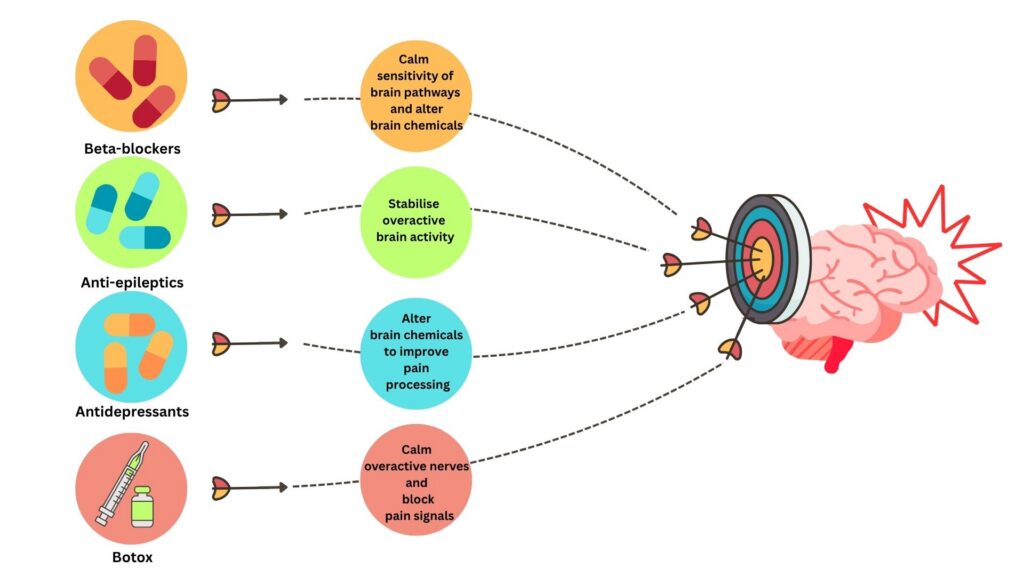
Although migraine biology is complex, researchers believe the beta blockers’ ability to calm down the body’s stress response may help it to reduce the sensitivity of migraine-related brain pathways and dampen some of the abnormal nerve signalling involved in attacks, potentially reducing their frequency. They may also influence chemicals involved in pain and inflammation, including CGRP. Beta blockers are considered a first-line preventive treatment for migraine and are often a first choice for people who also have conditions like high blood pressure or anxiety.
Anti-epileptic medications (e.g. topiramate)
What was it originally used for?
Medications like topiramate were originally designed to treat epilepsy and seizures. These medications prevent seizures by rebalancing the excitability of neurons in the brain.
How might it work to help prevent migraine attacks?
Migraine and epilepsy both include changes in the electrical activity of neurons in the brain. Because both conditions share some of the same underlying mechanisms, anti-epileptic medications can be repurposed to help stabilise overactive brain activity in migraine. It is important to note that women who are considering planning a pregnancy should avoid taking anti-epileptic medications, like topiramate, as it may cause harm to an unborn baby.
Antidepressants (e.g. amitriptyline)
What was it originally used for?
Medications like amitriptyline were originally designed to treat depression. Antidepressants work by altering brain chemicals such as serotonin and noradrenaline.
How might it work to help prevent migraine attacks?
Both serotonin and noradrenaline play a role in migraine biology by influencing pain pathways, mood changes and sleep. At lower doses, antidepressants may alter these chemicals to help the brain process pain differently and improve sleep, which can help reduce migraine frequency.
Botox
What was it originally used for?
While we may now associate Botox with cosmetic procedures, it was originally used to treat eye muscle disorders. It works by temporarily preventing muscles from contracting through blocking the release of a brain chemical, acetylcholine, that signals muscles to move.
How might it work to help prevent migraine attacks?
Botox is a treatment that can be used in people living with chronic migraine. It works by calming overactive nerves and by blocking pain signals. In addition to reducing the frequency of migraine attacks, it can also reduce how severe a migraine attack is.
How repurposed drugs expand migraine care
We know that migraine treatment is highly individual. What works well for one person may not work well for another, which often leads people to try several options before finding the right fit.
Drug repurposing helps expand the treatment options available. Using existing medications that have been shown to be effective for migraine can save time and cost, as researchers often already understand their safety profiles, allowing access to treatments to be accelerated. Although these medications are established, they can still cause side effects and should be prescribed and monitored appropriately. Not every medication works for every person, and treatment decisions should always be made with a healthcare professional.
Not only can drug repurposing increase the number of medications available for migraine management, but they can also teach researchers more about migraine biology itself. While this approach has worked and we now also have targeted preventive therapies, it’s clear that a medication doesn’t need to be designed specifically for migraine to make a real difference to people living with it.
You can learn more about these preventive medications for migraine here.